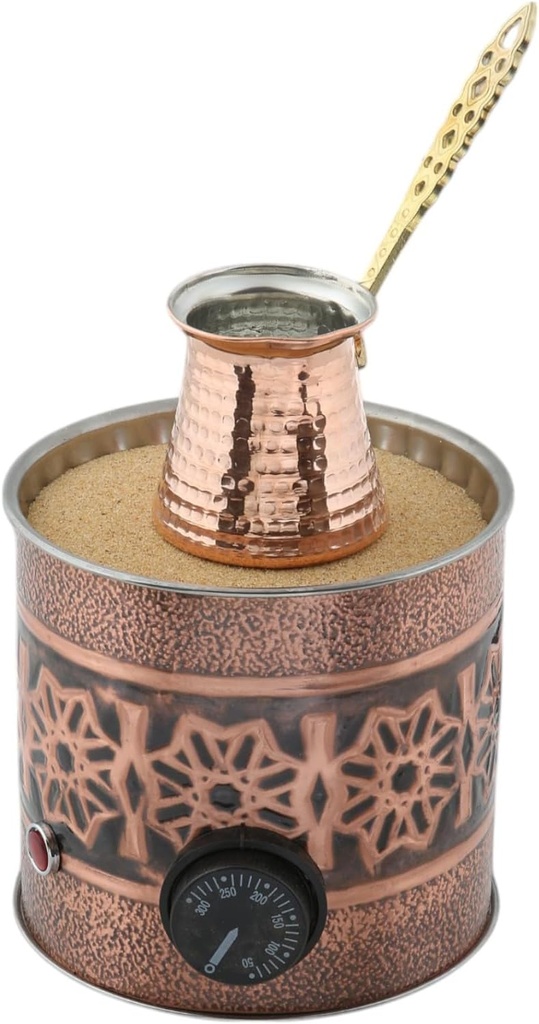
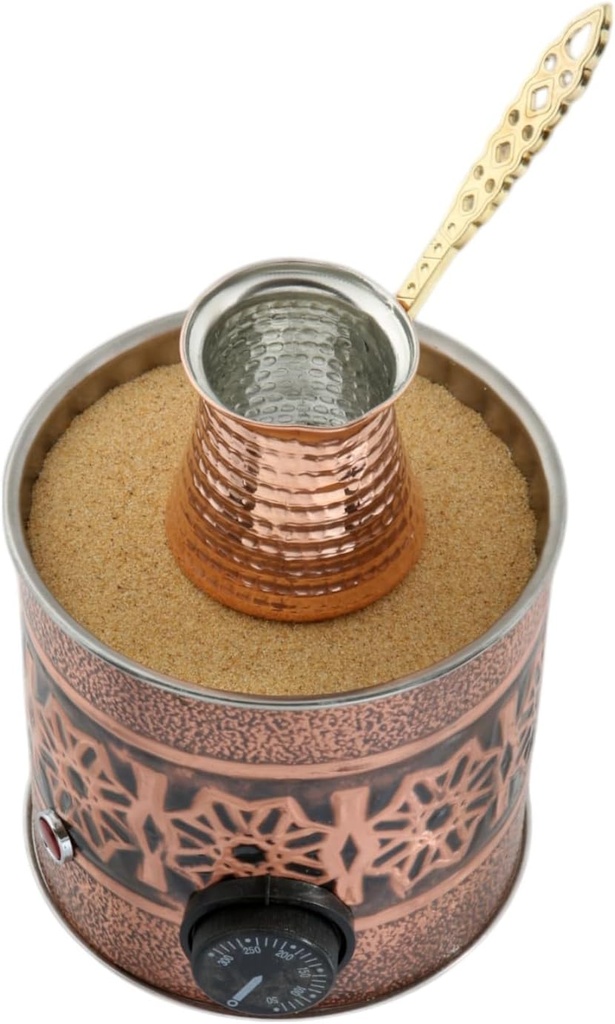
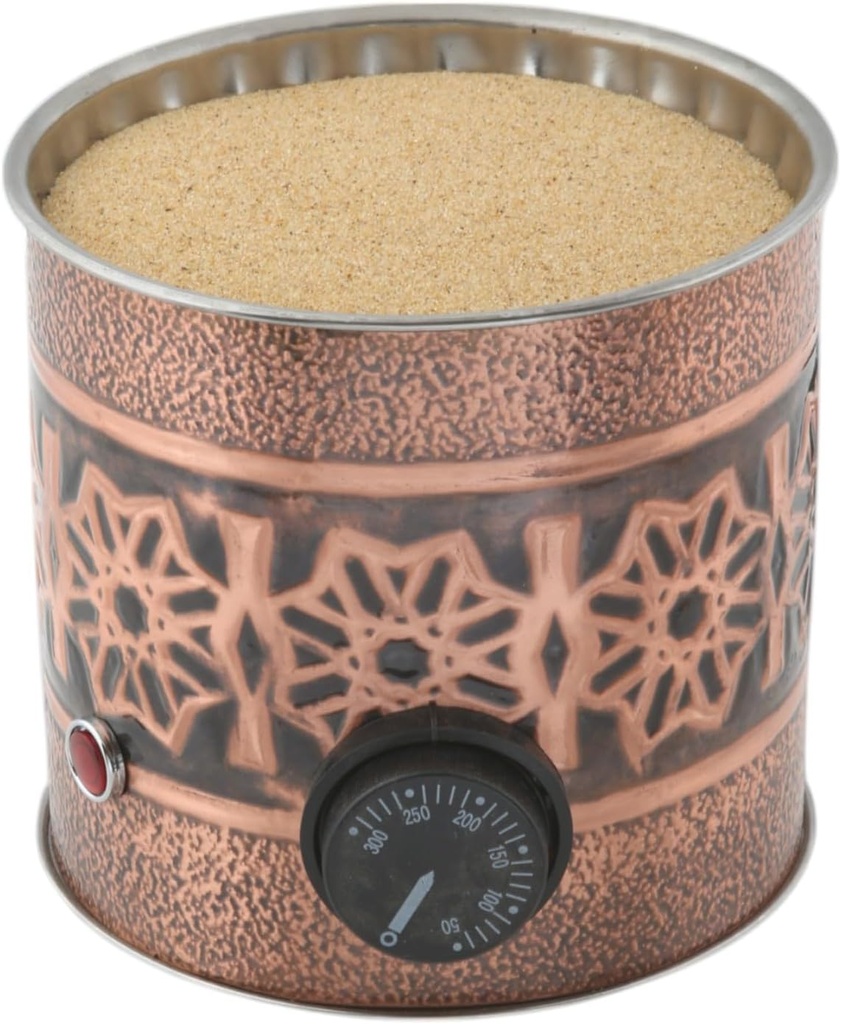
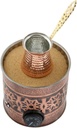
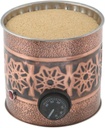
Tulip Home - Traditional Authentic Turkish Trend Design Copper Electric Hot Sand Small Coffee Maker Heater Machine 110V - 220V
- This Machine Designed , Sold , And Ship By Ella Home Accessories
- Material: Authentic Copper appearance is exquisite. Can be used for a coffee maker, tea, etc.
- Dimensions: 15 cm x 15 cm x 16 cm, (5.9 inch x 5.9 inch x 6.2 inch)
- Package includes: 1x Electric Copper Coated Coffee Maker Machine, 1x ( pack ) Sand, And 1x Copper Coffee Pots and
- Suitable For Living room , Residence , Parties , Café , Lounge , Restaurant
| Expiry Date: Nov 2026 |
| Special Feature: Turn Off-On Automatically |
| Capacity: 3 Fluid Ounces |
| Color: Authentic Copper |
| Product Dimensions: 5.9"d X 6.2"w X 5.9"h |
| Product Type: Coffee Maker |
| Brand: Tuliphomev |
Trend Designed Copper Sand Coffee Maker
Brews rich and authentic Turkish and Arabic coffee, perfect in just 5 minutes.
Specifications:
Notes:
feel free to contact us with any questions.
Instructions:
A Short Story About Coffee
According to one legend, the stimulating effect of coffee beans was first discovered by an Ethiopian goat herder named Kaldi, who noticed that his goats became more energetic after eating small red berries. He told nearby monks, that they could make a delicious drink by roasting the beans. Another story claims that a Persian physician named Al-Razi was the first to use coffee ("qahwa") as a stimulating medicine and mentioned it in his work The Continents. Coffee was first cultivated in Yemen on terraced farmlands. The habit of drinking coffee spread through Muslim pilgrims to Mecca and Medina and then across the Middle East. Later, coffee cultivation appeared in Arab countries and Egypt, where drinking coffee (or qahwa) quickly became a daily habit.
In the 16th century, travelers and botanists visiting the Middle East sent word to Europe about an unknown plant and the drink made from its fruit. Merchants quickly recognized the potential of the new drink, and the first bags of coffee beans reached Venice in the early 17th century. This was the moment when Europeans began learning about coffee. News of coffee reaching Venice spread rapidly, and soon Dutch traders also showed interest in coffee cultivation and trade. Thanks to European travelers and monks, coffee made its way worldwide and quickly became highly popular.
Note: for some countries like MEXICO, CHILE, COLOMBIA, AND AUSTRALIA in some situations, we can't send sand because this country's customs don't allow us.